Auricle is a a new tool to measure wellbeing in cities, neighbourhoods, residences, public services, and more. It provides real-time data using citizen-led roles & interactions designed to strengthen social connection and safety.


You can think of Auricle as…
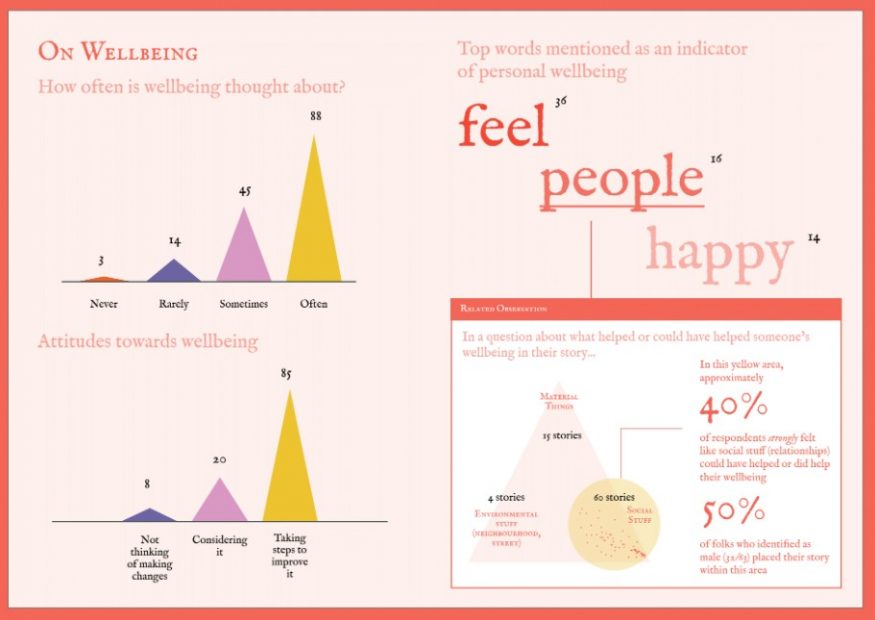
A source of local data on wellbeing
Experts from around the world, including Public Health Canada and Harvard’s Global Flourishing Study, agree: we need to prioritize wellbeing as a central goal for our communities, and one core step is to start measuring wellbeing locally.
So, how do we measure wellbeing? Especially when it means different things to different people, and can vary day-by-day, and moment-to-moment. Auricle takes a quali-quant approach. We combine “microstories” – moments that matter to people – with intentionally designed follow-up questions that place people as the experts of their own stories. This data enables us to unearth the range of underlying narratives people hold, and identify the factors that shape people’s wellbeing.
A mechanism for civic participation
Most public consultations rely on surveys and focus groups, and appeal to a particular audience: people with access to technology who see themselves as having an opinion worthy of sharing. The problem is, many marginalized people are missed in the process.
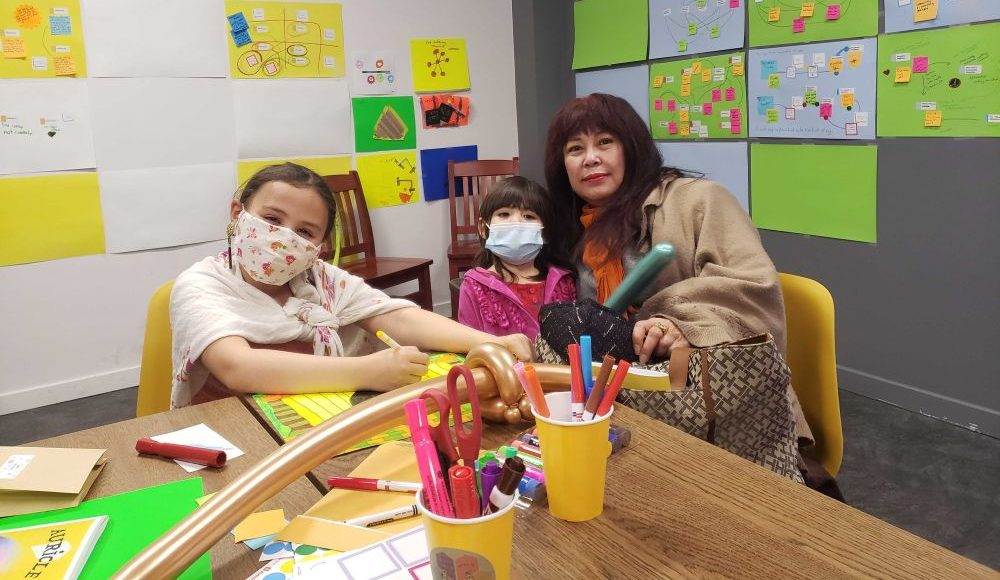
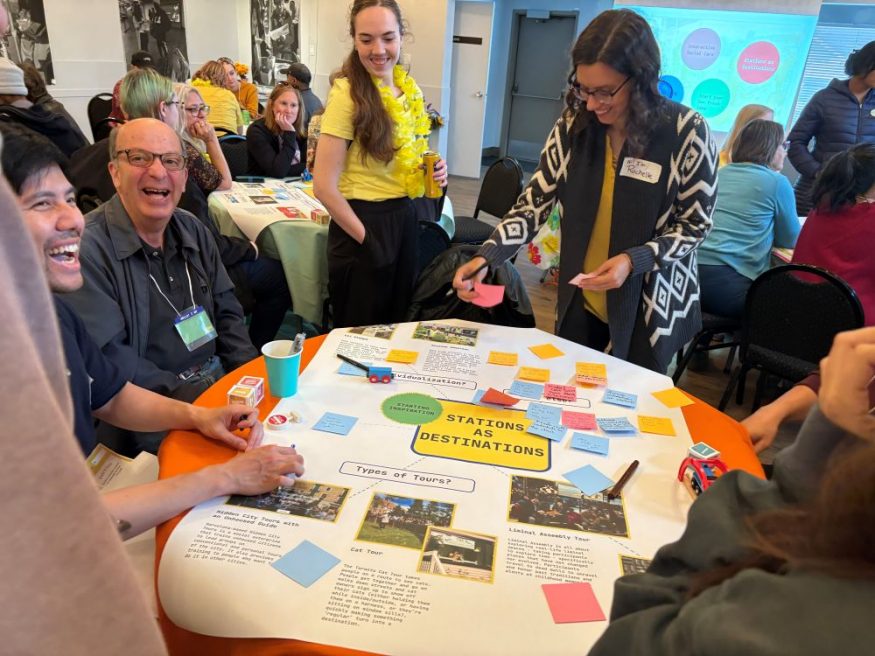
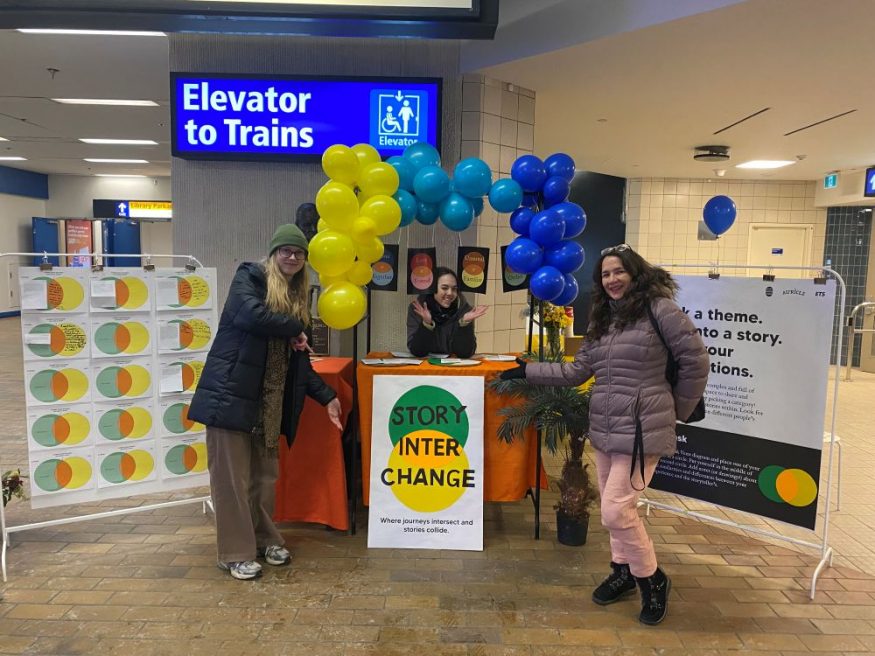
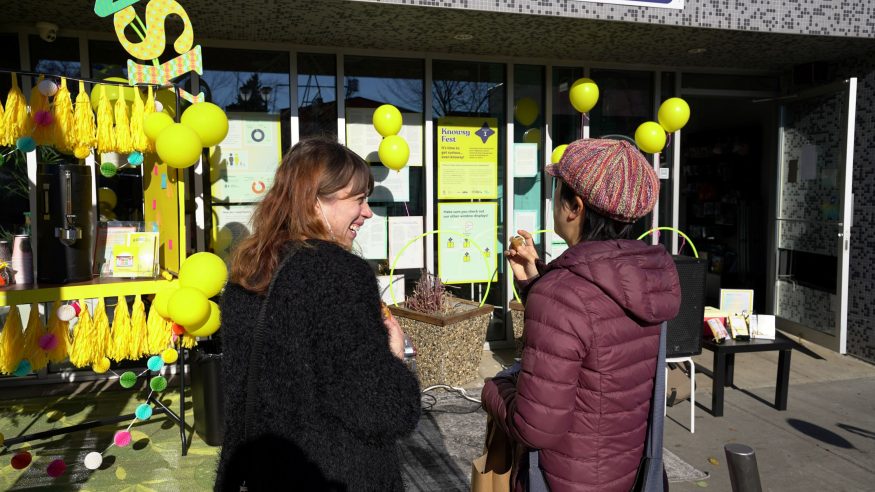
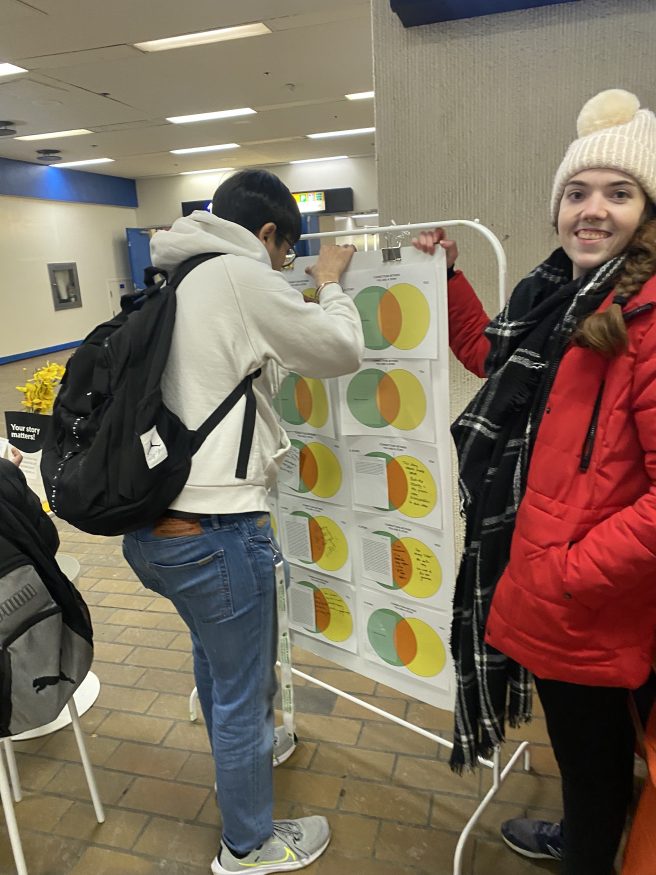
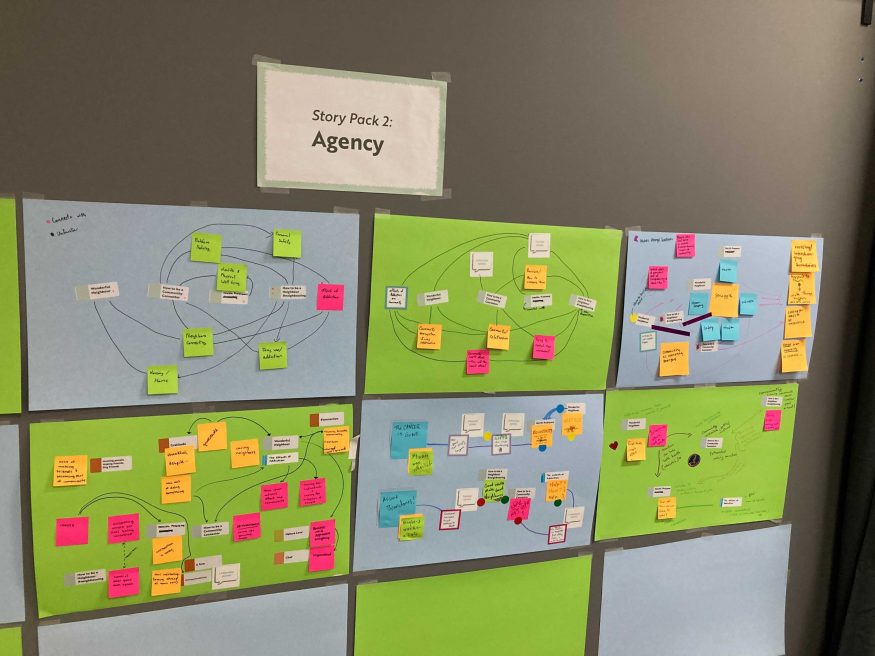
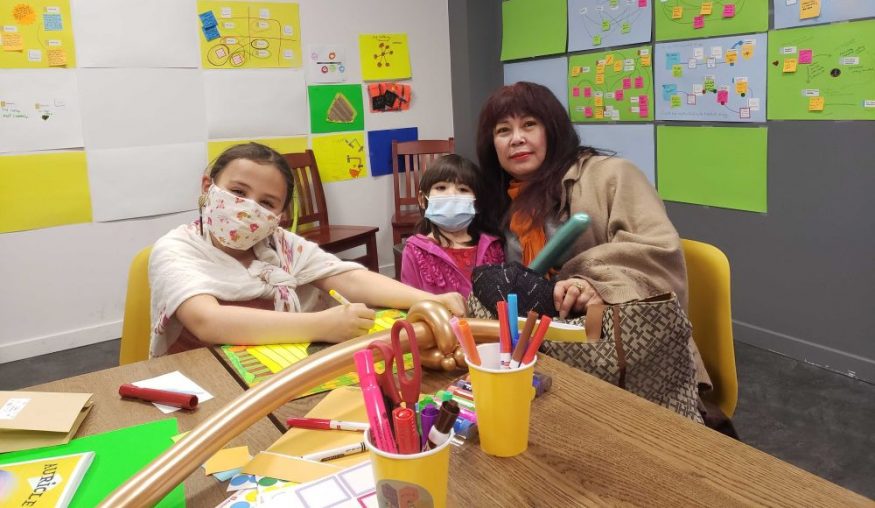
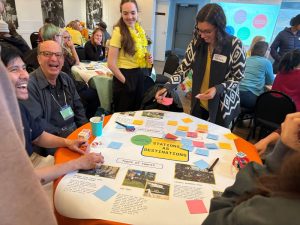
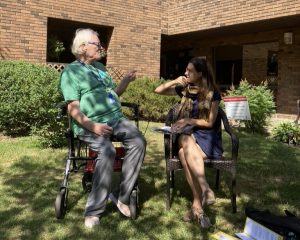
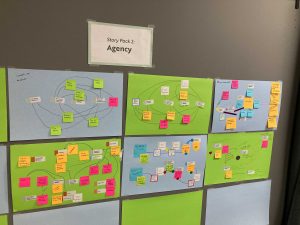
Auricle shows up in the places and spaces people already are, offering citizen-to-citizen conversations. This approach opens the doors to people who are often left out, in a way that is human and relational. Alongside sharing stories, members of the public are invited into the analysis and idea generation process. This looks like public story festivals and design jams, where we use music, games, and improv to spark creative action!
An intervention to increase wellbeing
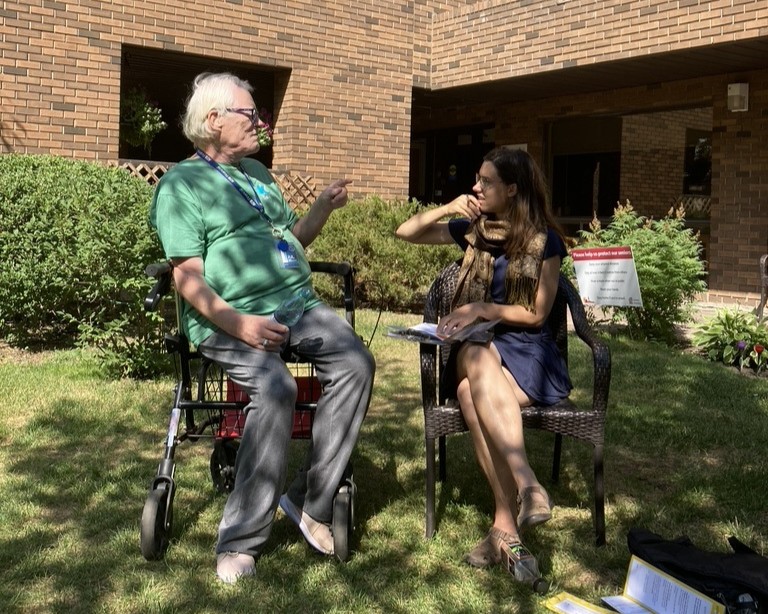
Through the use of Local Listeners and public space activations, Auricle enables people to feel seen and heard, and increases their sense of connection: two conditions for wellbeing.
A method for animating public or communal space
Local Listeners are trained to design and run activations that are warm, welcoming, and convivial – intentionally bridging people across lines of difference.
Core Components
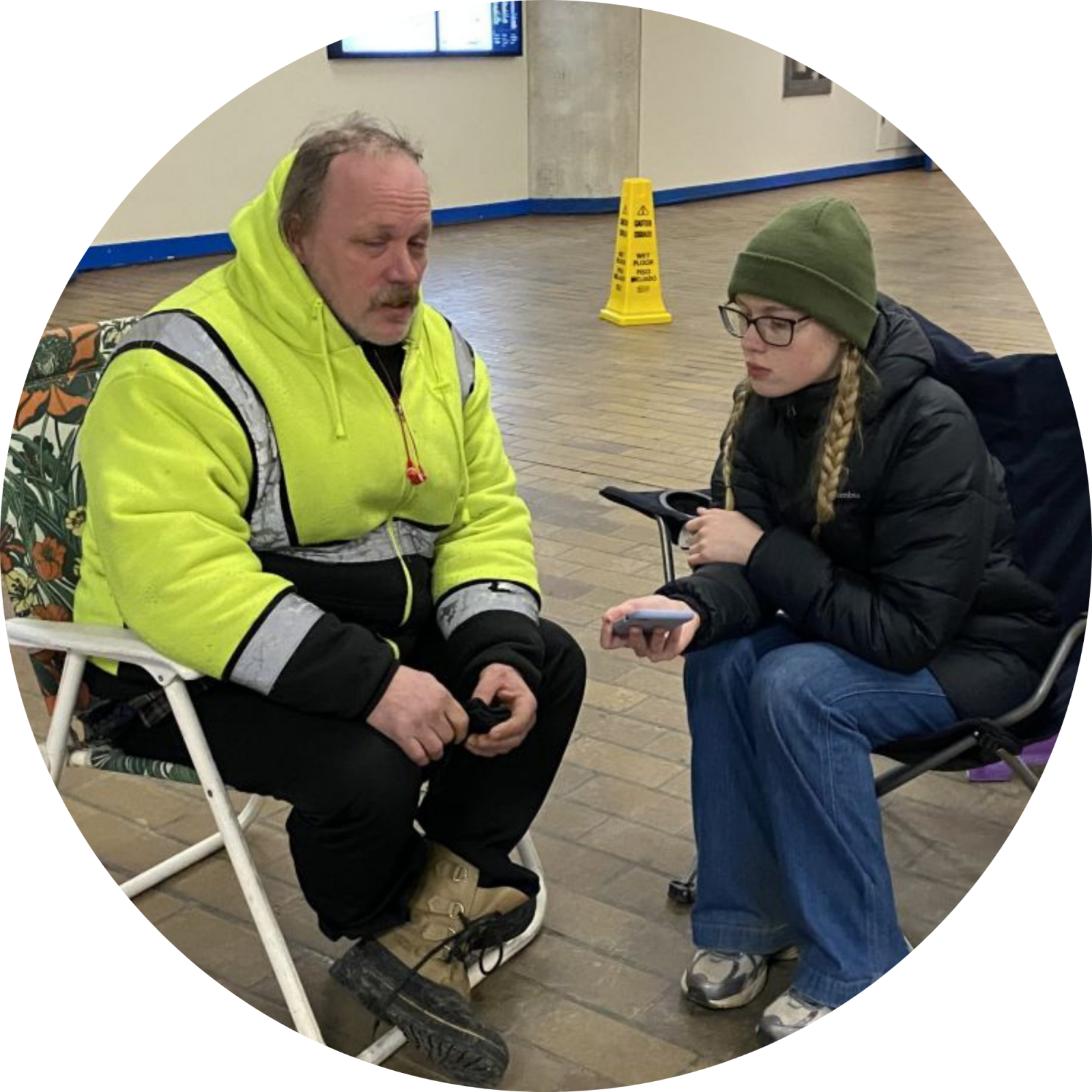
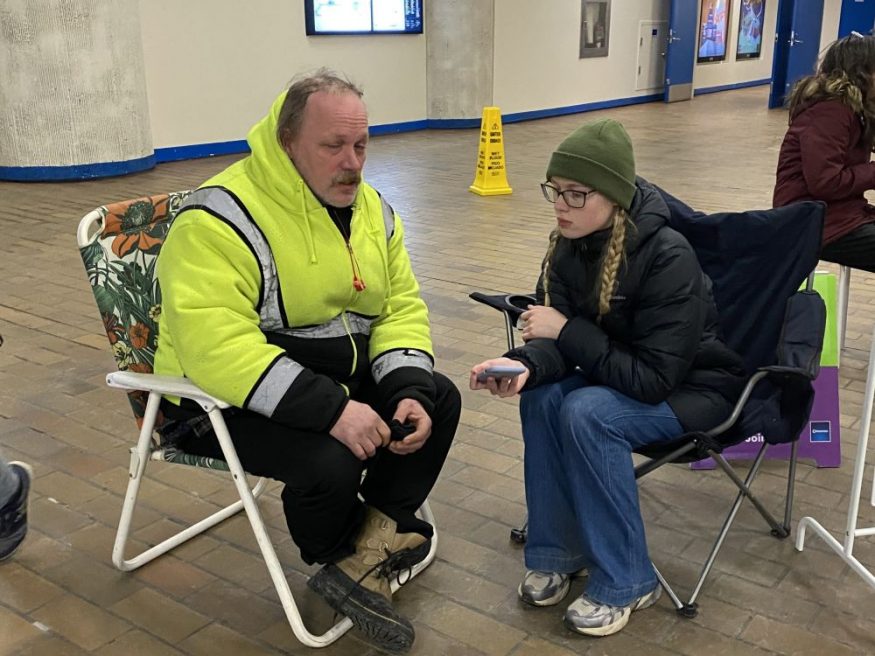
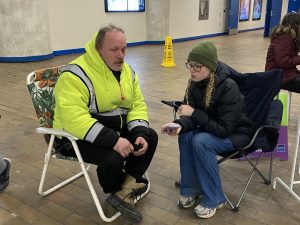
A new role for citizens called Local Listener. Teams of Local Listeners are trained-up to gather stories from fellow citizens in public spaces.
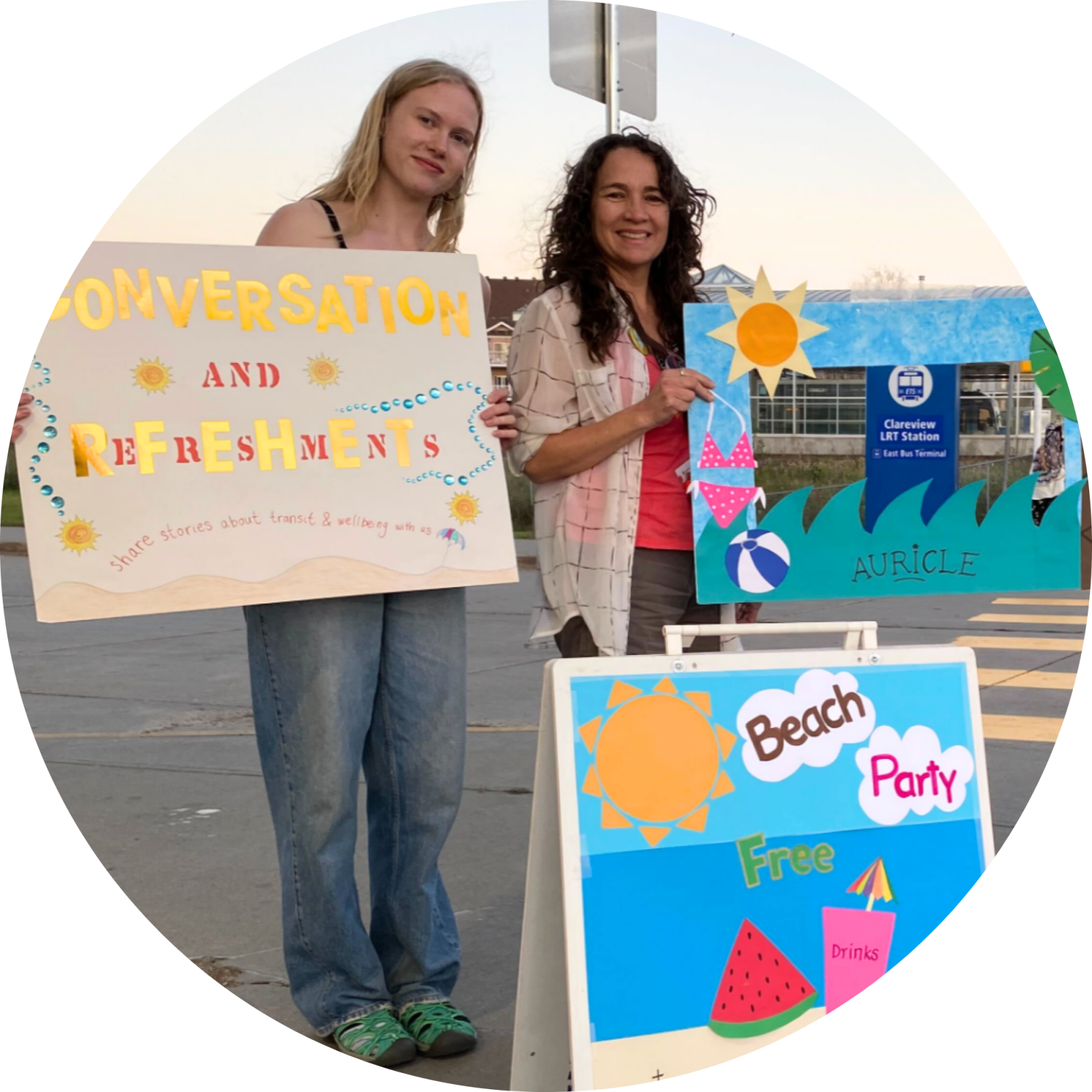
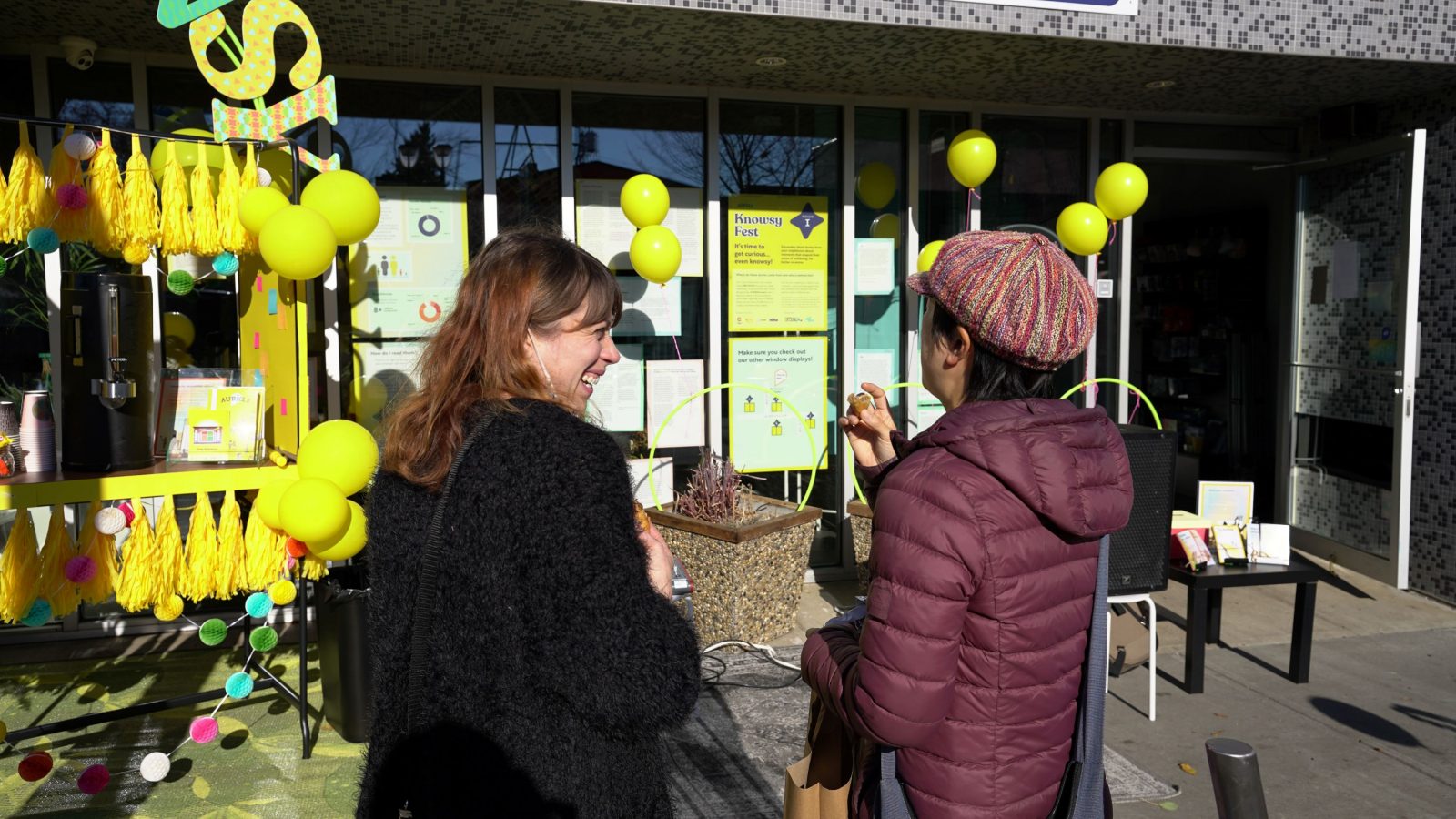
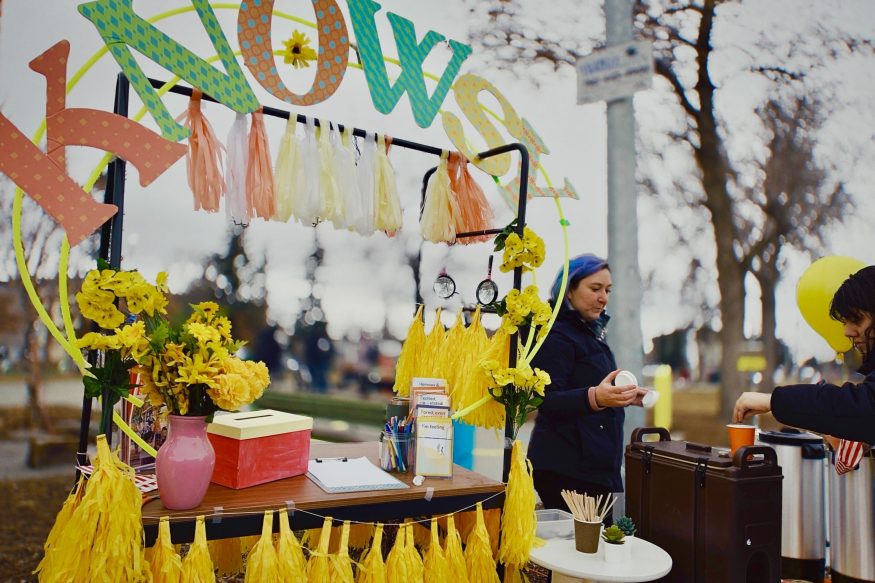
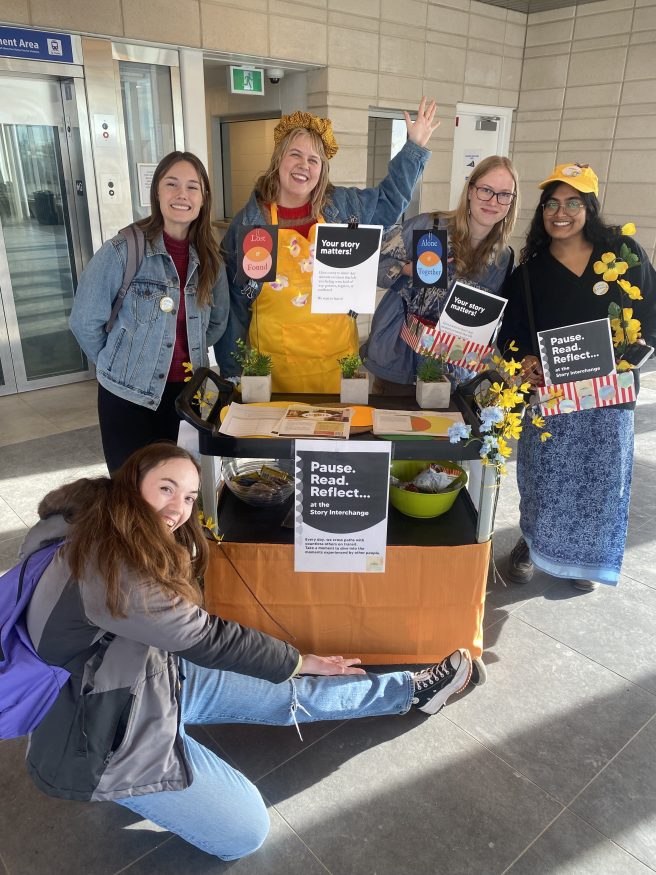
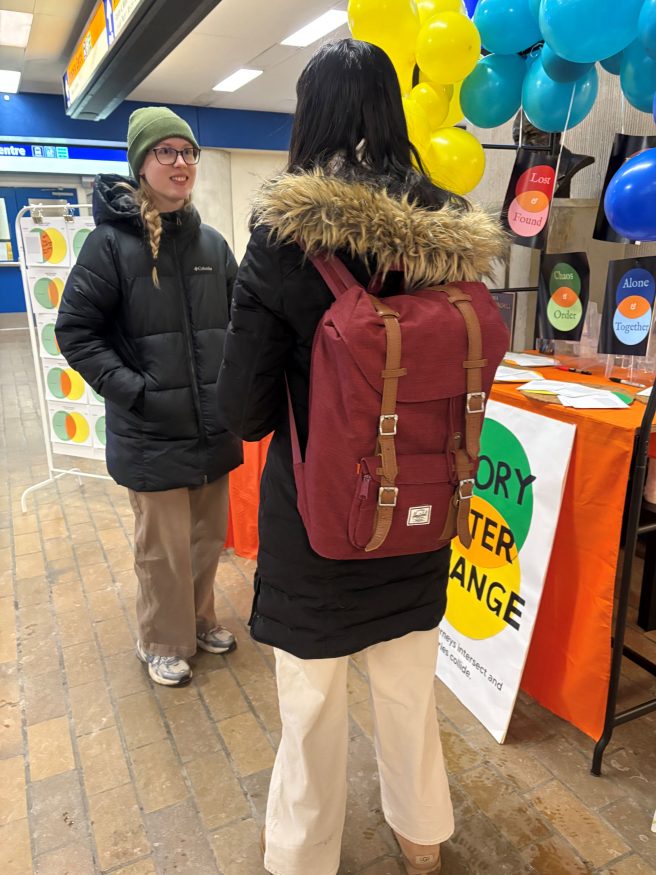
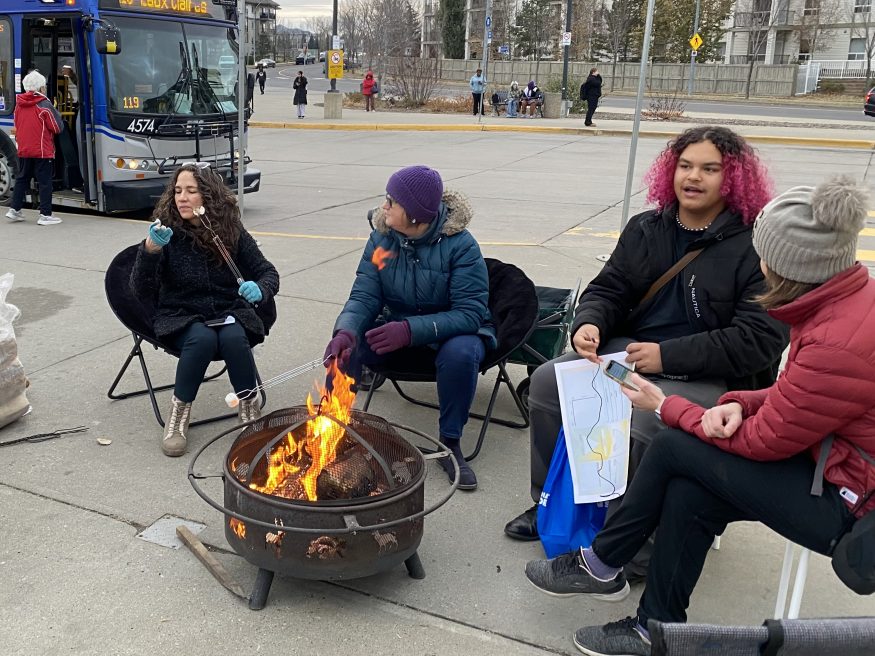
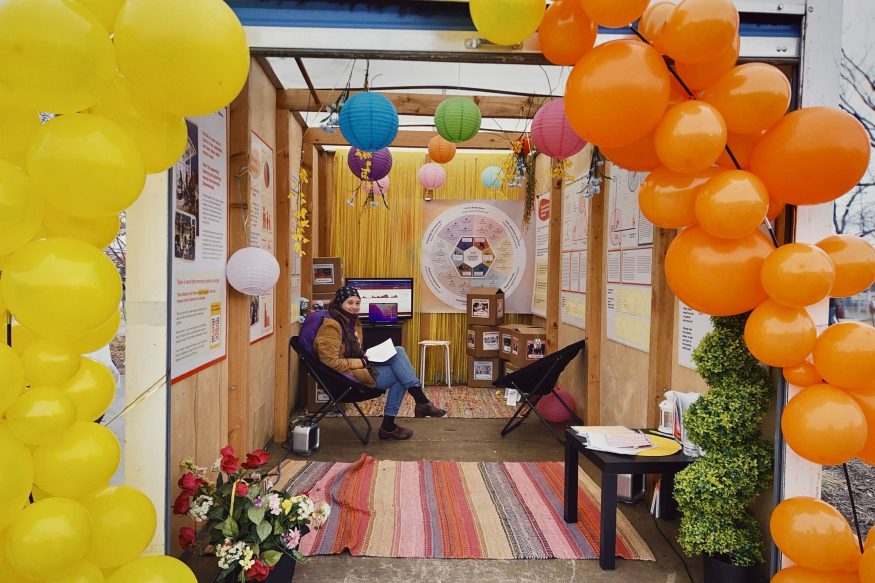
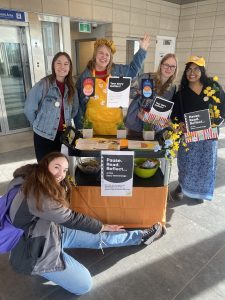
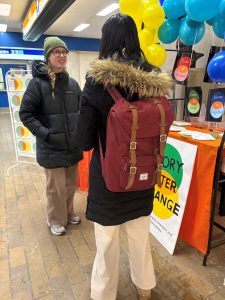
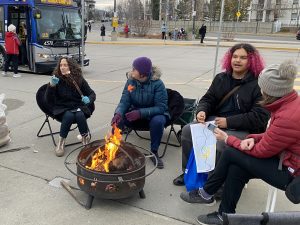
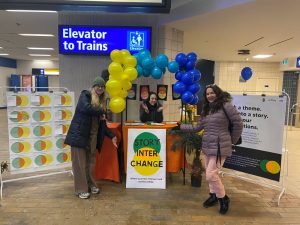
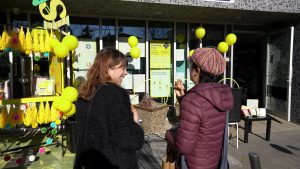
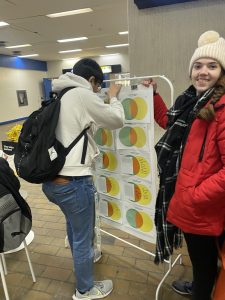
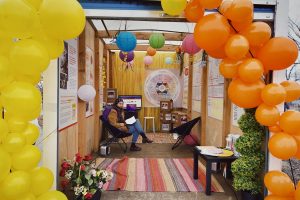
Public activations that spark curiosity, delight, and conviviality.
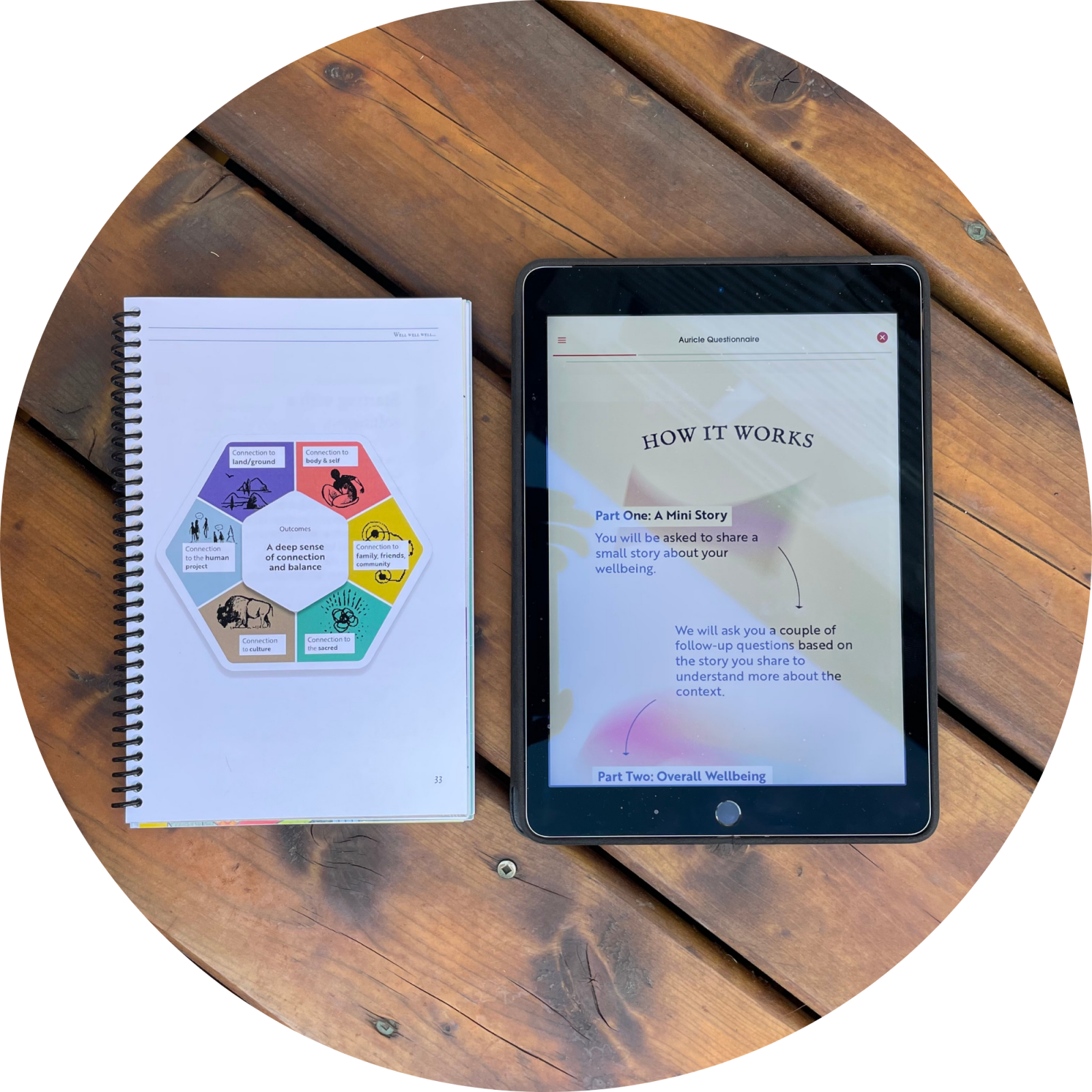
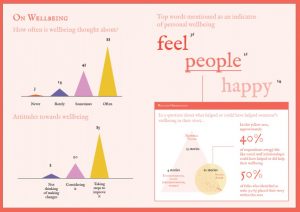
Story-collecting software to collect stories & visualize patterns in real-time.
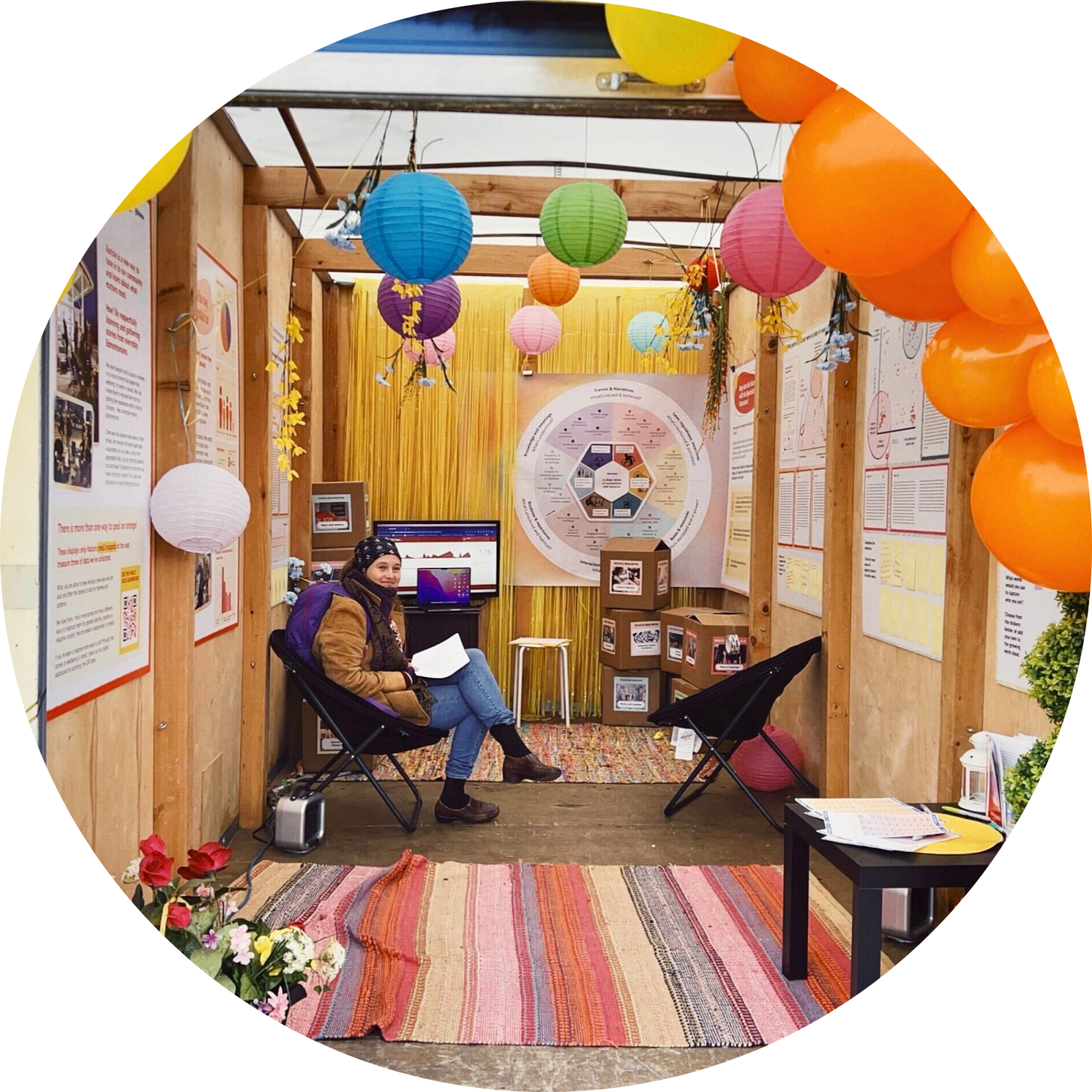
A public festival for engaging the public in sense-making and idea generation.
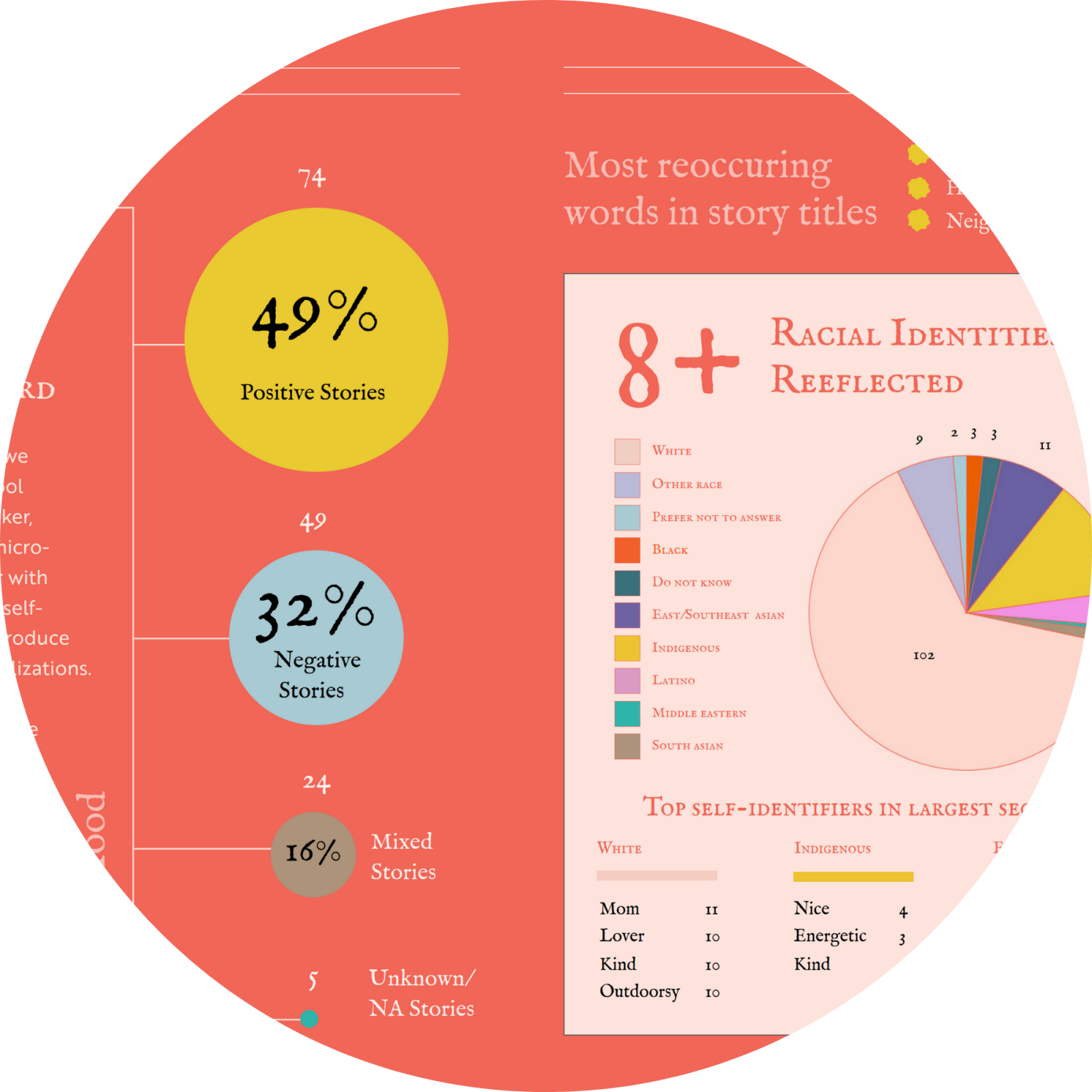
A dashboard for collective ownership and access to the data.
Uses
Since 2021, we’ve tested four rounds of Auricle:
- In two urban neighbourhoods as a tool for understanding what impacts wellbeing in a particular geography.
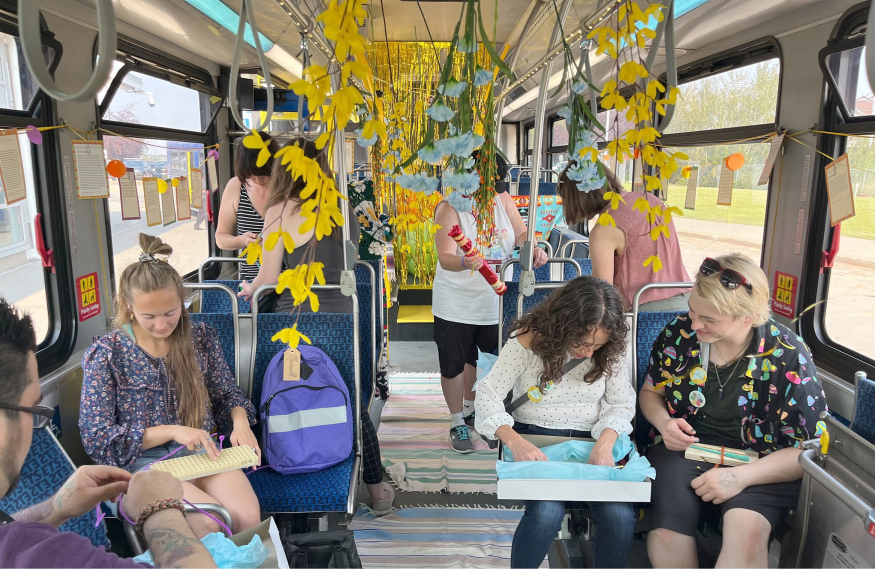
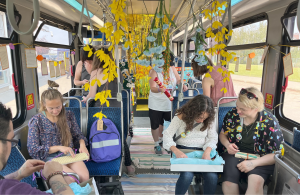
- In three city transit centres as a tool for understanding the relationship between public space and wellbeing.
- In and between transit centres, as a tool for challenging negative generalizations and shifting narratives. We also tested mobile activations and more citizen co-design sessions.
- We’ve found Auricle to be an adaptable model that can be tailored to specific contexts: neighbourhoods, city spaces like transit or rec centres, condos, apartments, and new developments — really anywhere where there’s a group of people!
Impact
- Reach. Over four rounds, Auricle has collected 750+ stories through 60+ activations with 32 Local Listeners.
- Engagement. Community-ownership and civic participation are core tenants of Auricle. Through public festivals and design jams, we’ve brought together over 500 city residents alongside policymakers to engage with interactive exhibits where they encounter stories of their fellow citizens, find patterns, ask probing questions, and generate ideas.
- Individual Impact. Feedback from story sharers overwhelmingly affirms the need for interventions like Auricle. Residents described how valuable it is to feel seen and heard: “This feels like the only way our city can hear how we feel. We need more stuff like this!” Other residents noted how cathartic sharing a story felt: “I haven’t been able to process this thing that happened to me but maybe if I share this story it will help me get through it.”
- Systemic Impact. Auricle not only offers deeper wellbeing data, but also actionable ideas for change. While systemic impact is hard to track, we are seeing the language of Auricle make its way into policy briefs and municipal policy platforms. We recognize there are many factors that shape how policymakers & organizational leaders make decisions, and see Auricle’s methods growing in visibility.
FAQ
What’s the history behind Auricle?
Auricle comes from five years of research & development work between the City of Edmonton’s RECOVER Urban Wellbeing Initiative and InWithForward. Designed to support the city’s wellbeing framework, Auricle is a demonstrator of three key levers for community wellbeing: (1) knowledge & meanings; (2) frames & narratives; and (3) roles & resources.
By meaningfully listening to and engaging residents, valuing the knowledge that emerges, and using that knowledge to re-frame tired narratives, cities can actively foster respect, connection, and contribution, critical conditions for wellbeing.
In 2021, we tested Auricle in Edmonton’s Alberta Avenue neighbourhood to explore the relationship between neighbourhoods and wellbeing. Between 2023 and 2025, we tested Auricle in a transit context to learn how transit, safety, and wellbeing are intertwined. Our goal has been to co-create Auricle with city residents, and learn how it can be a tool for change.
What pain points does Auricle address?
Poor quality data about wellbeing
At a local level, we know surprisingly little about how people experience wellbeing and what shapes it. Survey data which asks people to numerically rank their satisfaction or quality of life can only tell if people are well, not how well they are well, when, or where.
Extractive research
For too long, the process of colleting data has been extractive, not collaborative. Expert researchers set the questions, gather the data, and determine it’s meaning. Data is treated as a commodity rather than as a relationship.
Marginalized voices are left out
Surveys, consultations, and public engagement efforts often often focus on representative samples, and appeal to a particular type of audience – people who have access to technology, see themselves as having something to share, and might go out of their way to survey QR code on their phone. The problem is, many marginalized people get missed in the process.
Instead, Auricle works by showing up in context where people already are, by going in-person, and by listening – not as someone with a research background with a clipboard – but as one citizen to another. This approach opens the doors to engage people who are often left out, and in a way that is human and relational.
What function does Auricle play?
Another way to think about Auricle is as social infrastructure. We can think of social infrastructure as all the stuff in a city that enables human connection and direct exchange. According to researcher Tiffany Owens Reed, “Social infrastructure is the kind of infrastructure that can guide a community toward more amiable coexistence, that makes possible the kind of loose ties between strangers that ensure trust, collaboration, and peace.”
Why measure wellbeing?
Wellbeing is notoriously tricky to measure. Cities often measure things like rental costs, crime rate, proximity to recreation centres, and walkability, but these are poor proxies for wellbeing! They do not tell us how people actually feel about their lives. Harvard’s Global Flourishing Study speaks to need for local wellbeing metrics. Check out this article for more: Why we need to measure people’s well-being — lessons from a global survey
Why use micro-stories?
They allow for people’s narratives and values to rise to the surface in ways that typical surveys or multiple choice questions miss.
Why use citizens for the role of “Local Listener?”
We intentionally hire people from the community to be Local Listeners, rather than using city staff or research professionals. This:
> builds natural connections between neighbours in a city or public space
> draws people who have an innate desire to get to know others and listen
> makes us more approachable by not showing up with a uniform or clipboard
> enables us to hire Local Listeners who reflect the community itself
Why rely on in-person activations to collect data?
We prioritize in-person activations because they:
> spark curiosity, delight and conviviality between strangers
> foster wellbeing and a sense of connection in the moment
> are surprising, and shift people’s expectations of what might be possible in a public space
In this way, the way we show up and collect data is a wellbeing intervention in and of itself.
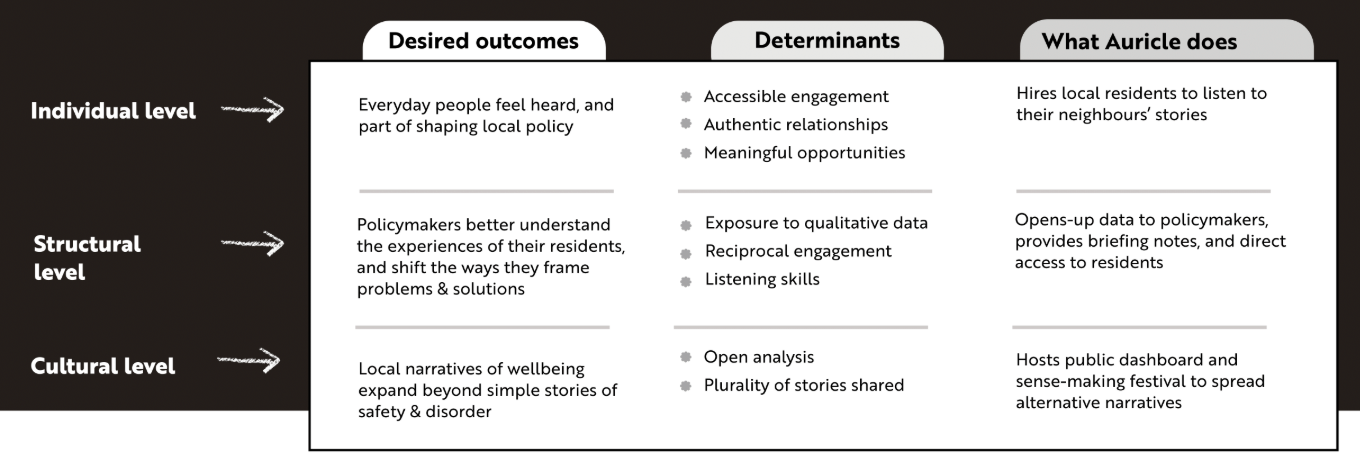
What’s Auricle’s Theory of Change?
Here’s what it looks like:
Try this model
Learn
Get introduced to the framework we use to measure wellbeing.
Apply
Explore how Auricle can grow community engagement & data collection in your context.
Photo Reel



Publications
-

Auricle in the neighbourhood of Alberta Avenue
What we learned testing Auricle in a neighbourhood context.
-

Book of Stories from Auricle in Alberta Ave (2021)
A sampling of stories collected by Local Listeners in the neighbourhood of Alberta Avenue.
-
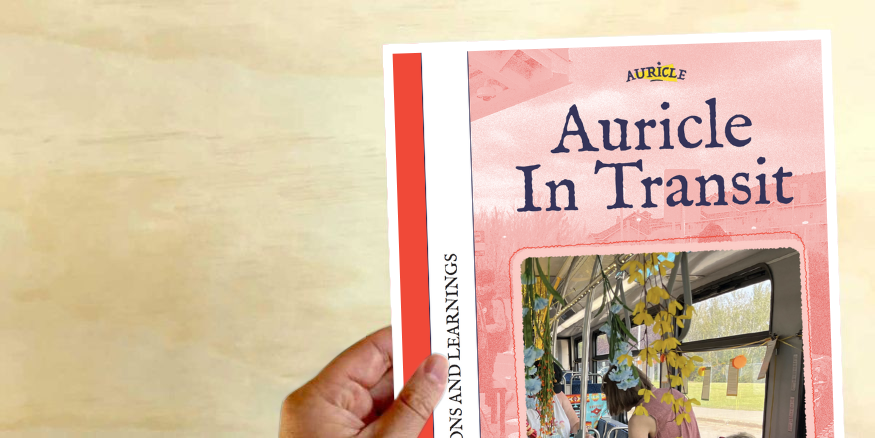
Auricle in Transit: Reflections and Learnings
What we learned bringing Auricle within city transit contexts.
-
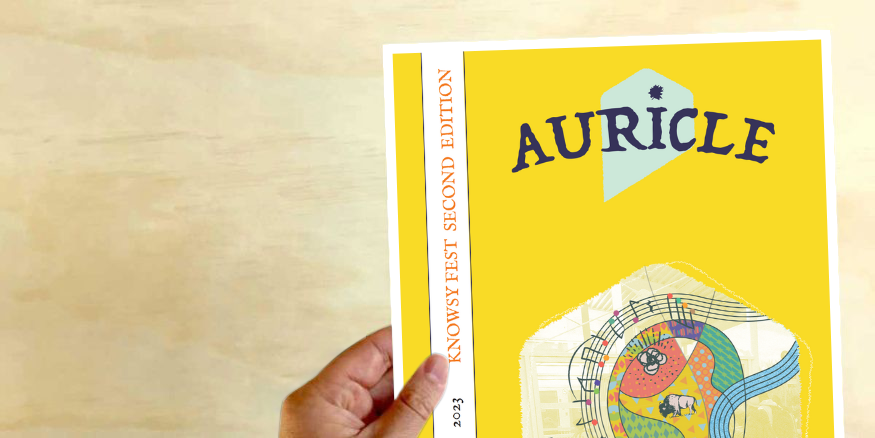
Auricle in Transit: Assorted Stories (2023)
A collection of stories shared by people on buses, LRTs and transit stations.
